New analysis from PitchBook reinforces what so many founders already know: Cash is tight.
With the notable exception of AI startups, founders in almost every sector are finding it harder and harder to secure venture capital (VC) funding.
The tightening of investment criteria, increased scrutiny, and a more cautious approach by investors have made the fundraising landscape more difficult than ever. The PitchBook data shows the time between fundraising rounds has been increasing steadily since Q3 2022 and many founders are facing tough choices about how best to deploy what capital they have to ensure their businesses remain viable and their dreams remain alive.
There are a number of factors underlying the current challenge of securing venture capital:
Economic Uncertainty: Global economic instability has led to a more cautious approach by venture capitalists. Investors are more risk-averse, focusing on startups with proven business models and clear paths to profitability, making things particularly difficult for early stage ventures.
Stricter Investment Criteria: VCs are now scrutinizing potential investments more rigorously and startups need to demonstrate strong traction, significant market potential, and solid financial metrics to secure funding. The due diligence process has also become more extensive. Arguably this is not a bad thing, since greater scrutiny ultimately protects both investors and founders, but it does mean the fundraising process is longer and more arduous, which can be detrimental to startups that need immediate capital to fuel growth.
Competitive Landscape: The number of startups seeking funding has increased, leading to heightened competition. PitchBook data suggests the U.S. has more startups than VCs can support: 55,000 venture-backed business all vying for investment, while some 2,000 VC firms have effectively hit pause on any new investments. With limited VC funds available, only the most promising startups can secure investment.
Valuation Pressures: Startups often face pressure to accept lower valuations, which can dilute ownership more than initially anticipated. This is particularly challenging for founders looking to maintain control of their companies.
The Merits of Venture Debt in This Climate
While many founders still fight shy of taking on debt, and while venture debt is certainly not an alternative to VC investment, it should be a complementary part of any startup’s financial strategy and the smart use of venture debt can help cash-strapped founders navigate achieve the growth they seek even in the current challenging market conditions:
Non-Dilutive Capital: One of the most significant advantages of venture debt is that it provides capital without diluting ownership. Founders can secure necessary funds while maintaining control of their company.
Faster Access to Capital: Compared to the extended due diligence process of equity financing, venture debt can be arranged more quickly. This is crucial for startups that need immediate capital to seize growth opportunities.
Extended Runway: Venture debt can extend a startup’s financial runway, providing the time needed to reach key milestones and improve metrics before the next equity round. This can result in better valuations and terms.
Flexibility in Use of Funds: Venture debt can be used for various purposes, such as scaling operations, product development, and marketing efforts. This flexibility allows startups to allocate resources where they are most needed.
Complementing Equity Financing: Venture debt is often used alongside equity financing to optimize a startup’s capital structure. It can bridge the gap between funding rounds, reducing the pressure to raise equity at unfavorable terms.
Real World Example: Supporting a Tech Startup
Consider a tech startup that has developed an innovative software platform. The founders have a solid business model and are seeking $60M of equity financing, based on their own valuation. However, pricing pressure on equity means they would be required to surrender more equity than they would like, in return for that $60M.
This is where venture debt comes into play. Instead of diluting their equity, the founders accept $40M in equity financing and take the remaining $20M in debt.
This strategic use of venture debt extends their financial runway, allowing them to achieve significant milestones and present a stronger case in the next equity round. When they eventually approach VCs again, they can do so with improved metrics and a higher valuation, ultimately securing better terms and preserving more ownership.
There are thousands of startups that find themselves in this kind of position and the smart use of venture debt, pursued with the buy-in of investors can be a lifeline that makes the difference between success and failure.
ATEL Ventures has announced an agreement to provide equipment financing to Harbinger, a Southern California-based manufacturer of electric trucks, to enable the company to expand its manufacturing capacity.
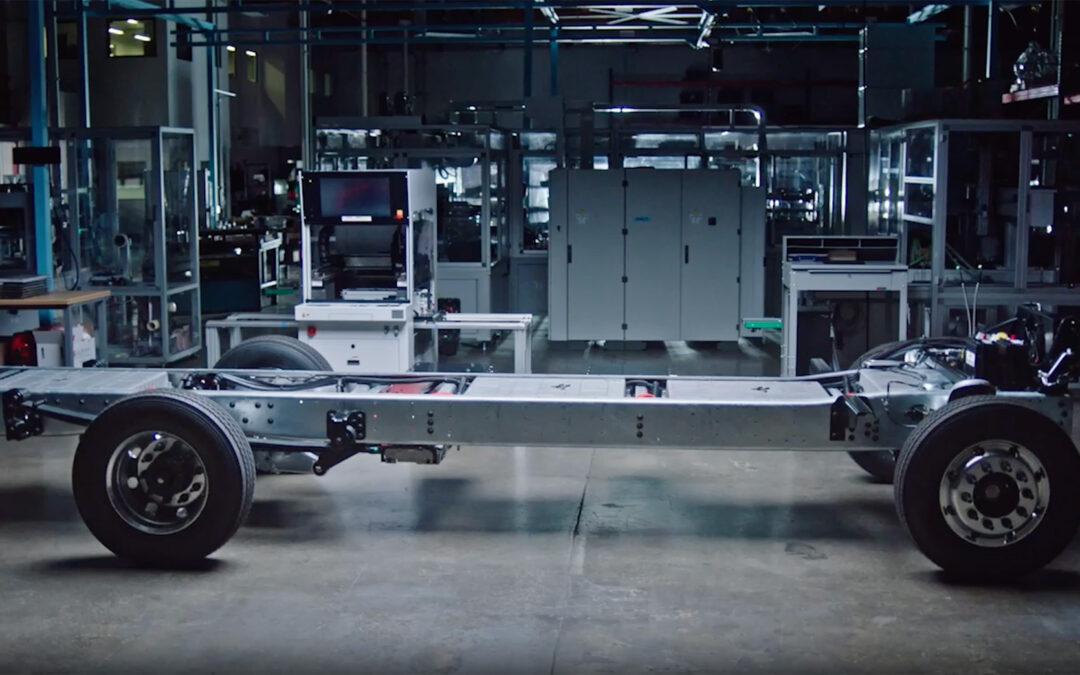
Harbinger is focused on meeting the demand for medium-duty electric vehicles (EVs) with a first-of-its-kind vertically integrated EV platform designed to deliver improvements in safety, driver experience and vehicle operation.
“More and more commercial fleet operators are turning to EVs, and Harbinger provides a solution with zero price acquisition premium over gas or diesel-powered vehicles,” said Steven Rea, President, ATEL Ventures, Inc. “The future is electric and while other manufacturers are busy electrifying older vehicles, we believe Harbinger’s ground-up solution will emerge as a leader in this sector.”
John Harris, CEO and Co-Founder of Harbinger said: “We have received 4,000 orders from customers including Bimbo Bakeries USA, THOR Industries, Mail Management Services and more. The financing provided by ATEL Ventures will help us expand our manufacturing capabilities.”
Alongside the debt financing by ATEL Ventures, Harbinger has attracted over $100M of venture investment from Greycroft, Tiger Global, Ridgeline, THOR Industries and others, including an oversubscribed $73M Series A round.
ATEL Ventures has announced the completion of an agreement to provide $20M of growth debt to Isar Aerospace, a launch service provider for small and medium-sized satellites.
Founded and headquartered in Munich, Germany, Isar Aerospace is developing Spectrum, a two-stage rocket specifically designed to launch small to medium satellites and satellite constellations into orbit.
Isar Aerospace is building on a high vertical integration and uses advanced technologies and a high degree of automation in its manufacturing, to make access to space more flexible and cost-efficient. The capital provided by ATEL Ventures will enable the company to finance the purchase of state-of-the-art equipment used in the production of its launch vehicles.
Satellites that will be launched by Isar’s Spectrum vehicle have the capacity to bring internet connectivity to rural communities and those in developing countries—currently around one-third of the earth’s population. They can also enable multiple use cases around Earth Observation or Navigation. Such satellites will have a key role in fighting climate change or enabling smart mobility.
Steven Rea, President, ATEL Ventures said: “Satellites have enormous potential to improve access to telecommunication, resource tracking and management, and to help tackle climate change. The satellite market is expected to be worth $1TN by 2040. Launch is the key bottleneck in that revolution and we therefore expect Isar Aerospace to play a major part in it by enabling flexible and cost-efficient access to space.”
David Kownator, Chief Financial Officer, Isar Aerospace said: “Developing a launch vehicle along the approach of vertical integration requires upfront investment in specialist equipment. This agreement with ATEL Ventures is an important component of our financing model, especially as we are starting the construction of a new large-scale manufacturing facility.”
By Dean Cash, Chairman and CEO, ATEL Capital Group
Since we began providing venture debt 25 years ago, with the creation of ATEL Ventures, it has been our great privilege to witness, meet and partner with countless inspirational individuals, whose talent and tenacity have led them to found and grow businesses that have gone on to great success, and in some cases to transform whole industries. We are proud to have played a small part in these successes.
As most involved in the startup world know all too well, a vision, talent and tenacity are not necessarily enough to ensure success. It comes down to capital and the execution of a sound business plan, with many potentially game-changing ventures sadly failing due to a deficiency of one or both.
Any startup carries risk, but this is especially true with capital-intensive ventures that seek to disrupt sectors such as transport and mobility, healthcare, agriculture, materials science and space tech… all those areas that require significant upfront investments in machinery, tools and equipment. These ventures often either struggle to raise the necessary capital or run out of runway before they achieve critical mass.
In many cases these are the very businesses that we most need to succeed: they have the potential to improve connectivity, health outcomes, food security, sustainability and more.
Hard tech startups push the boundaries of possibility, but the future of hard tech innovation is far from certain. We have published this paper to stimulate a discussion about how the venture funding ecosystem can collaborate to maximize these businesses’ chances of success.
We believe in the power of hard tech to reshape industries, improve lives, and drive progress. At ATEL Ventures, our commitment to this belief is not just philosophical; it is practical and financial.
Venture debt is more than just a financial instrument, it is a catalyst, providing the capital that visionary founders and their groundbreaking companies need to grow.
We are excited that our financing of hard tech innovations will continue to drive progress and improve lives, and welcome others who share our vision to join us.